
Strava tells you what happened.
RunSignal helps you understand why.
RunSignal connects your training, recovery, race history, and readiness data to uncover the patterns behind your performance—so you can train smarter, race better, and keep improving.
Connects with the data you already use
Insight for every part of your running journey.
Race Intelligence
Understand why a race went well, faded late, or fell apart halfway through. RunSignal connects pacing, effort, recovery, weather, race history, and training context to help explain performance.
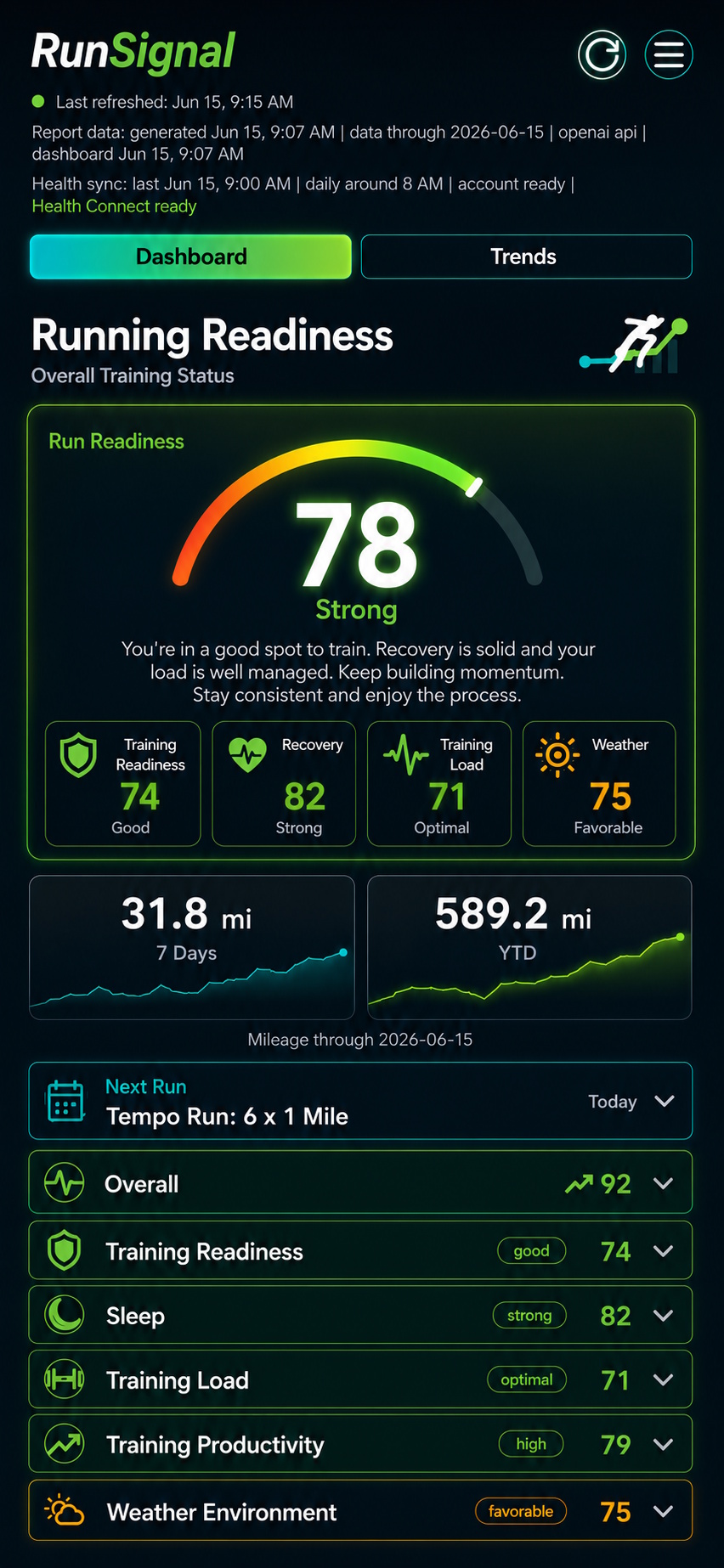
Training Readiness
Turn sleep, recovery, mileage, recent effort, and historical trends into practical readiness insight. Know when you are prepared, when you are carrying fatigue, and when the data suggests caution.
Run Comparisons
Compare similar runs, routes, workouts, or races to identify what changed. See how pace, heart rate, cadence, elevation, and effort shifted across comparable efforts.
Built for Runners First
RunSignal is designed for runners who want meaningful insight without drowning in charts. Simple enough for everyday use. Deep enough for serious analysis.
Future Run Club Tools
RunSignal will eventually help run clubs better understand participation, member activity, event engagement, and community trends. Individual runner insight comes first. Club intelligence comes next.
More Than Data. It's Understanding.
Modern runners already have plenty of data. The challenge is knowing what it means. RunSignal looks across your training history, race performance, recovery trends, and real-world context to uncover the signal behind the numbers.
Connect
Bring together the data you already use.
Analyze
Compare runs, races, effort, recovery, and context.
Understand
See the likely factors behind performance.
Improve
Use better insight to make better training decisions.
Every race has a story.
A finish time only tells part of the story. RunSignal helps identify the choices, conditions, and patterns that shaped the result.
Illustrative race analysis
Edinburgh Half Marathon
- Pacing was controlled early but heart rate drifted noticeably after mile 7.
- Travel fatigue in the 48 hours before the race may have reduced endurance capacity late in the effort.
- Recent long run history suggests aerobic fitness was strong despite the late-race fade.
- Late-race rebound in the final mile shows the performance ceiling was still higher than the finish time suggests.